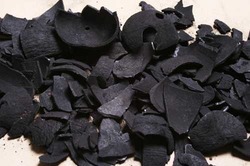
Coconut shell based activated carbons has Lower Ash Content, Higher Amount of Micropores, Higher Iodine Number, Excellent Hardness and it is very efficient in the removal of…
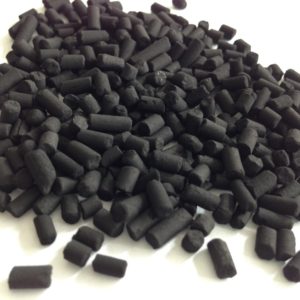
Pellet activated carbon produced from coal, wood and coconut shell, either by high temperature steam activation or chemical activation under stringent quality control. With low…
In the 4th millennium B.C., during the Neolithic Age in southeastern Europe, the Mariţa culture used graphite in a ceramic paint for decorating pottery. Some time before 1565 (some sources…
The principal types of natural graphite, each occurring in different types of ore deposits are: There are three distinct types of natural graphite which occur in different…
Graphene nanoplatelets represent a new class of carbon nanoparticles with multifunctional properties. Graphene nanoplatelets have a “platelet” morphology, meaning they have a very thin but wide…
Graphene Oxide and Reduced Graphene Oxide are available in powder form, as a dispersion, or as a spin coated film which is available in oxide…
Graphene is a crystalline allotrope of carbon with 2-dimensional properties. Its carbon atoms are densely packed in a regular atomic-scale chicken wire (hexagonal) pattern. Each…
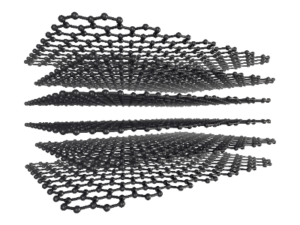
Graphene is an allotrope (form) of carbon consisting of a single layer of carbon atoms arranged in an hexagonal lattice. It is the basic structural…
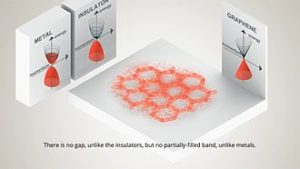
Graphene is an allotrope (form) of carbon consisting of a single layer of carbon atoms arranged in an hexagonal lattice. It is the basic structural…
Graphite, archaically referred to as plumbago, is a crystalline allotrope of carbon, a semimetal, a native element mineral, and a form of coal. Graphite is…
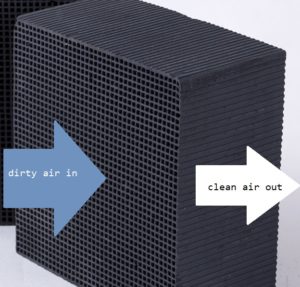
Honeycomb-like activated carbon is a new type of absorption material made by high quality powder activated carbon and binder. Honeycomb carbon block has a large…
Steam-activation is primarily used for coconut charcoal and coal. In the production of steam-activated charcoal, first the coconut shell or coal is heated to create…
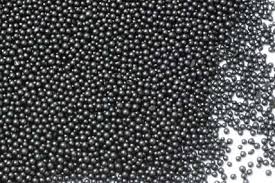
In the environmental management field, using activated granular carbon to remove dissolved organic compounds and volatile organic emissions is a widely accepted procedure. However, there…
Typical Properties of Granular Activated Carbon Bituminous Sub-bituminous Lignite Nut Shell Iodine Number 1,000-1,100 800-900 600 1,000 Molasses Number 235 230 300 0 Abrasion Number…
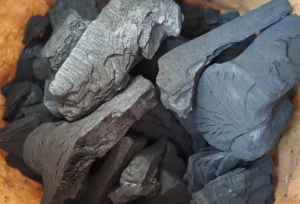
Factors that affect the performance of Activated Carbons Molecular weight: As the molecular weight increases, the activated carbon adsorbs more effectively because the molecules are…
To understand how activated charcoal works, it is important to know the difference between “adsorb” and “absorb”. Sponges absorb liquids, and they can be squeezed…
There are two types of absorption of activated carbons: Physical Adsorption – During this process, the adsorbates are held on the surface of the pore…
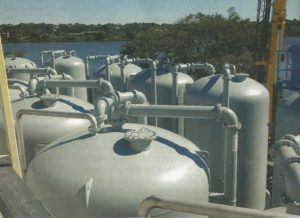
Scientists at NASA’s Glenn Research Center have developed a unique water purification method that can be used for water recycling or point-of-use applications. Originally developed…
removal at a number of stages in municipal sewage treatment. Odours can develop at a number of points in municipal waste water treatment plants where…